The Next Frontier: How AI Agents Are Moving from Conversation to Action
AI is moving from conversation to action. Discover how AI agents are stepping out of the chatbox to automate workflows and transform industries.
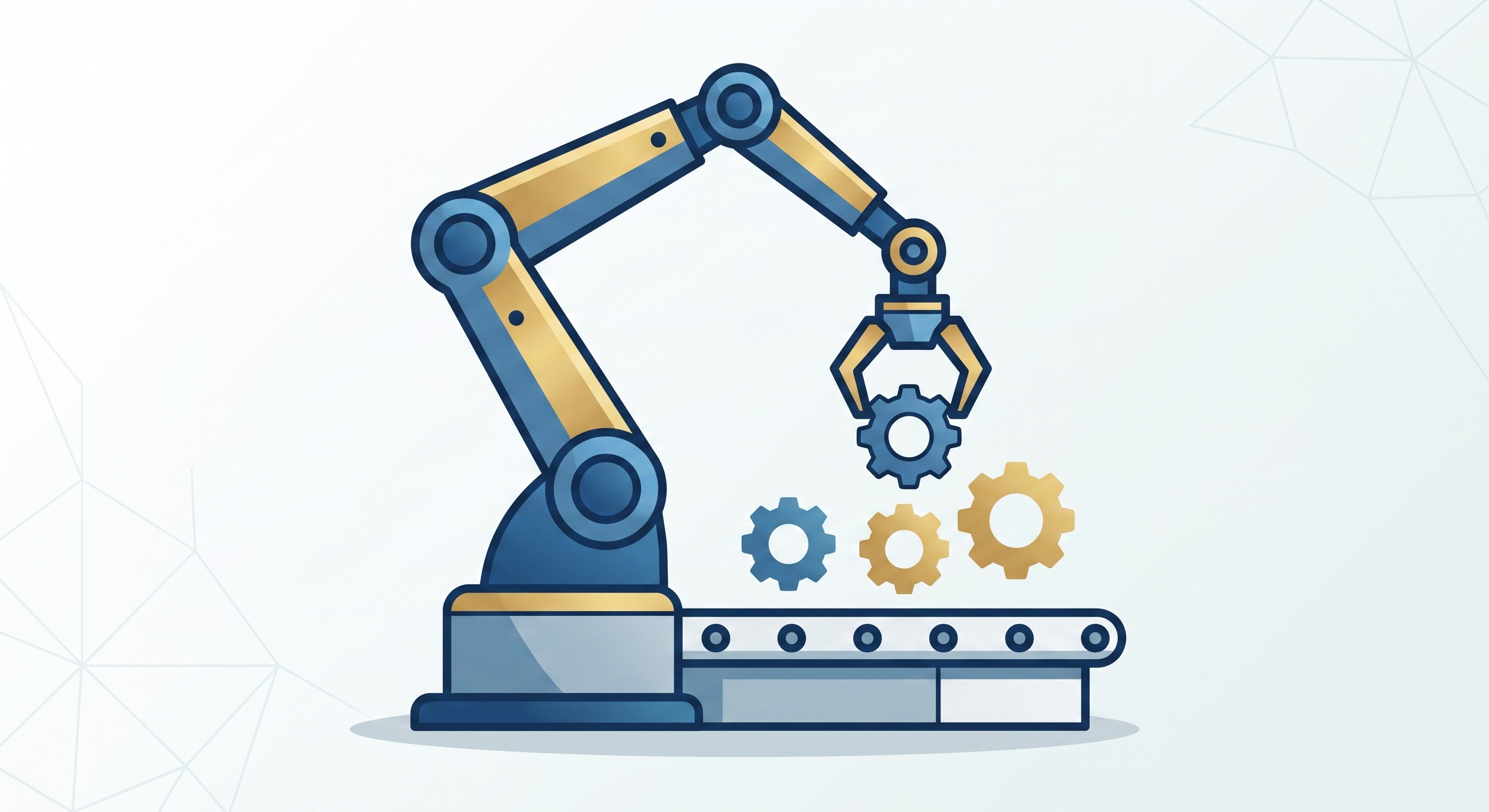
Title: The Next Frontier: How AI Agents Are Moving from Conversation to Action
Welcome back to the Kalamena AI blog! Today, we are diving into the next massive evolutionary leap in artificial intelligence. We’ve spent the last few years mastering conversational AI, but the landscape is shifting. AI is stepping out of the chatbox and into the driver's seat.
We talk—and will continue to talk—endlessly about generative artificial intelligence. Initially, it was a novelty: a tool capable of writing emails, summarizing articles, or translating languages. Shortly after, it became a coding assistant and a natural language powerhouse. But if you look closely at recent trends, a profound shift is happening right before our eyes.
AI has moved from conversation to action. We are entering an era of operational maturity.
At Kalamena AI, we believe the conversation is no longer just about models that generate text or images. We are now talking about AI agents—systems capable of interacting with applications, querying databases, using external tools, and making supervised decisions in real-world environments.
The Agent Revolution: Redefining Productivity
The core difference between a traditional AI assistant and an AI agent lies in agency. An assistant responds to your prompts. An agent acts. It can plan, retrieve information, link multiple steps together, and complete complex workflows.
For businesses, this opens up an entirely new frontier. Instead of merely answering customer queries, an AI agent can analyze risks, generate commercial proposals, coordinate schedules, and automate end-to-end internal processes. The real magic happens when these cognitive systems stop being isolated tools and become an intelligent layer seamlessly integrated into an organization’s proprietary data and daily operations.
Real-World Impact Across Sectors
AI agents are already moving the needle across several critical industries:
- Healthcare and Science: We are seeing the rise of medical agents capable of operating within electronic health record systems—requesting tests, interpreting results, and suggesting diagnostic hypotheses under professional supervision. In rare diseases, AI is accelerating diagnostic processes that used to take years. AI is even being integrated into experimental labs to optimize chemical syntheses.
- Enterprise and Public Administration: AI has graduated from the testing phase into live business processes. In finance, it’s being used for wealth management and regulatory compliance. In the public sector, AI is streamlining administrative procedures, optimizing agri-food supply chains through platforms that combine AI and IoT, and even helping legal professionals identify precedents and draft responses.
- Retail and "Agent-Based Commerce": The next big retail transformation is systems that act on behalf of the consumer or the business. Imagine virtual assistants that don't just recommend products, but actively compare alternatives, calculate productivity impacts, and execute purchases within predefined limits.
When AI Steps Off the Screen: Robotics and Industry 4.0
AI isn't just trapped in our computers; it’s making the leap into the physical world. Driven by the convergence of generative AI, intelligent agents, and multimodal models, robotics and autonomous systems are entering a new era. From modernizing internal logistics in manufacturing plants to advancing autonomous vehicles, AI is becoming the brain behind Industry 4.0. The focus is no longer on making robots look human, but on making them safe, highly efficient, and capable of delivering real value.
The Backbone: Infrastructure and Cybersecurity
The race for AI dominance isn't just about having the smartest models; it’s about physical and digital infrastructure. "AI factories"—specialized data centers combining massive computing power, energy efficiency, and secure cloud services—are the true driving force behind AI development.
Furthermore, as AI integrates into strategic sectors, it becomes a dual-edged sword in cybersecurity. While it vastly improves our ability to detect threats and automate defenses, it also arms malicious actors with sophisticated phishing and deepfake capabilities. Consequently, cybersecurity must become predictive and woven into the very fabric of system design.
Trust, Transparency, and The Road Ahead
As Europe and other regions move toward risk-based regulatory models, the message is clear: innovation cannot come at the expense of security. Transparency, human oversight, and AI literacy are no longer optional.
So, what should organizations do now? The main takeaway is that AI can no longer be treated as a side experiment. It must be a core business strategy. Companies need to identify high-value use cases, prepare their data infrastructures, and upskill their teams.
Here at Kalamena AI, we always emphasize one fundamental truth: The most successful AI won't necessarily be the most technically complex one; it will be the one that is useful, safe, understandable, and governable.
The era of operational AI is here. True transformation isn't about automating what we already do—it’s about completely rethinking how we work, innovate, and generate value. Are you ready for the shift?
Stay tuned to Kalamena AI for more insights on how artificial intelligence is reshaping our world.