More Than Sound: How AI Is Restoring Voices — and Lives
There is a particular grief that comes with losing your voice as a musician — one that goes beyond illness. It is the silencing of how you have always told the world who you are. AI voice technology is beginning to change that. Not by replacing what was lost, but by finding it again — buried in old recordings, rehearsal tapes, and fragments of a life before diagnosis. Patrick Darling's story is one of the first of its kind. It will not be the last.
When AI Becomes the Instrument
Most artists spend their lives searching for the right medium. A painter finds a brush. A poet finds a rhythm. A singer finds their voice. For Patrick Darling — composer, songwriter, and former frontman of the Irish folk group The Ceili House Band — that medium was always sound. His own sound. Raw, human, irreplaceable.
Then, at 29, he was diagnosed with Motor Neuron Disease/ALS.
Over the years that followed, his ability to speak faded. His ability to sing disappeared entirely. But the songs kept coming. He never stopped writing. He simply had no way to let them be heard — not the way they were meant to be heard, in his voice, the one he had spent a lifetime building.
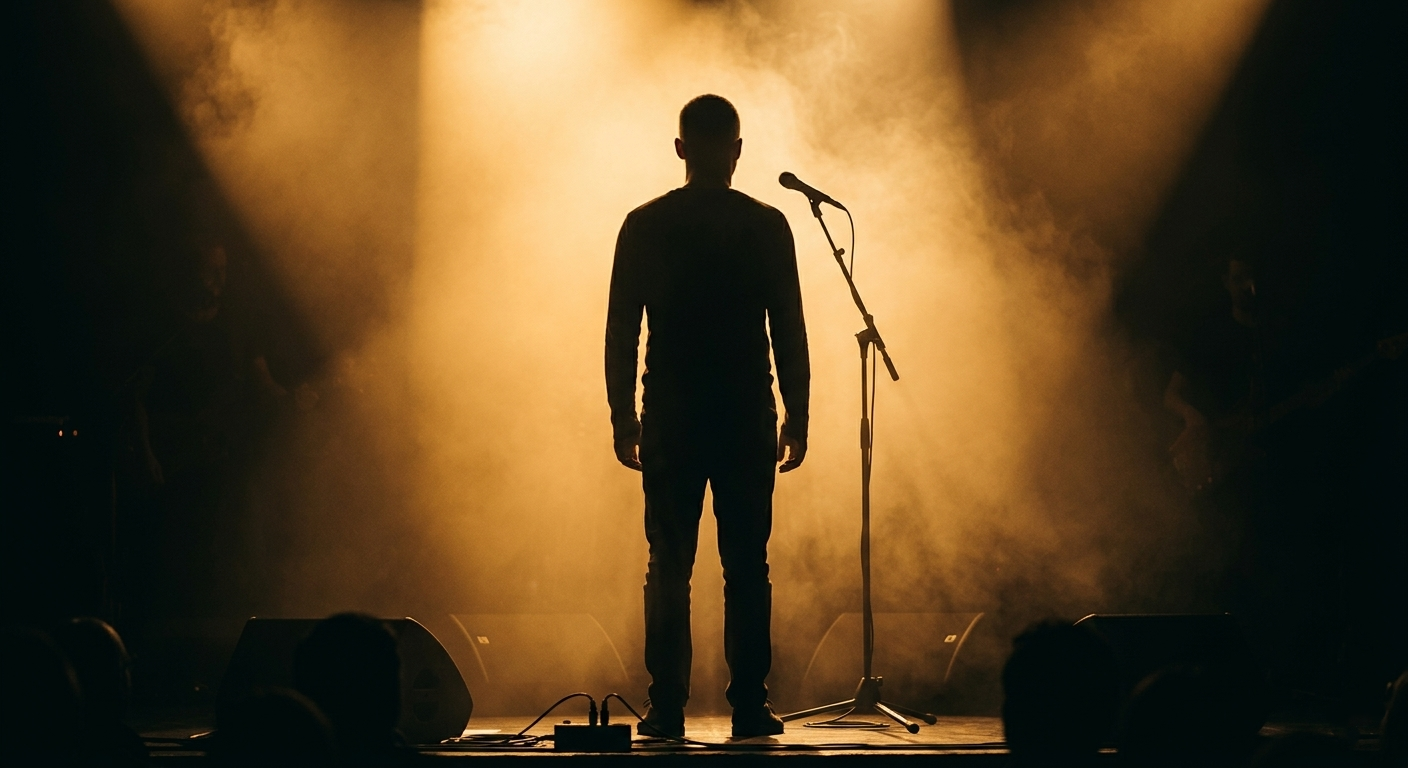
That changed on February 11, 2026, when Patrick took the stage at a Voice AI summit in London before nearly 1,000 people and performed an original song with his former bandmates. Not mimed. Not interpreted by someone else. Performed — in his own voice, reconstructed through AI.
It is believed to be a world-first of its kind.
The Voice Was Always There
What made Patrick's performance possible was not the invention of something new. It was the recovery of something that already existed.
Working alongside Richard Cave, a speech therapist, Patrick used pre-diagnosis recordings to rebuild his vocal model through AI voice and music generation technology. Every nuance, every texture, every characteristic quality of how he once sang — fed into a system that could reconstruct it, note by note, phrase by phrase.
The result was not a simulation. It was a restoration.
"Losing my ability to sing had a profound and devastating effect on me," Patrick said on stage. "It felt like I was losing an essential part of my identity. The grief was overwhelming. I felt like a lesser version of myself."
The AI did not give him a new voice. It gave him back the one he already had.
"For the first time in years, I could hear myself sing again," he said. "That changes everything."
Back Where He Belonged
At the summit, Patrick reunited with his bandmates Nick Cocking and Hari Ma for something neither of them had done since his diagnosis — they played together. The song, Ghost of a Man I Never Met, was written entirely by Patrick, in his own words, for a voice that AI helped bring back to life.
His family was in the audience.
Afterwards, Patrick told the BBC: "I felt part of the band again. I was a performer again. I felt like I was singing again. I also felt like I was being seen for more than just my illness. It will forever be an experience that I will treasure."
That last line carries the weight of something larger than one performance. To be seen as a musician — not as a patient, not as a diagnosis, not as an inspiration — is something AI, used with intention and care, made possible that night.
What This Means for Artists
Patrick's story sits at the frontier of what AI voice technology is beginning to make possible for artists living with degenerative conditions. For too long, a diagnosis like ALS has meant an eventual end to creative expression — not because the ideas stop, but because the physical means of sharing them disappear.
AI is quietly rewriting that equation.
Voice reconstruction tools can now draw on existing recordings to rebuild a singer's unique vocal profile. AI music generation can translate that profile into new performances. And the gap between what a musician can no longer physically do and what they can still create is narrowing in ways that would have seemed impossible only a few years ago.
This is not about replacing human artistry. It is about preserving it — and in some cases, unlocking it again entirely.
Across healthcare, education, and the arts, AI impact programs are extending access to voice technology for individuals experiencing permanent voice loss, working toward a future where a diagnosis does not have to mean the end of a creative life.
Restoring communication is essential. Restoring the ability to create is something else entirely. It is the restoration of identity.
And for Patrick Darling, standing on that stage in London, singing his own song in his own voice — it was proof that AI, at its best, does not replace what makes us human. It helps us hold onto it.