Voice AI for the MENA Region
Deploy voice AI agents across MENA in Arabic and English. Built for MENA enterprises, banks, healthcare providers, QSR chains and more.
Arabic Dialects Supported
Accuracy Rate
Always Available
Response Time
Built for the Region. Not Translated for It.
Over 400 million people across the Middle East and North Africa speak Arabic as a first language — and no two countries speak it the same way. Gulf, Levantine, Egyptian, and Maghrebi Arabic each carry their own rhythm and character. Most global AI platforms address this with a single Modern Standard Arabic model.
KalaMena AI adapts in real time to the dialect your customer is actually speaking — across every MENA market, every industry, and every channel. No translation layer. No awkward formality. Just a conversation that feels native.
KalaMena AI is built for exactly this.
22 Countries. One Platform.
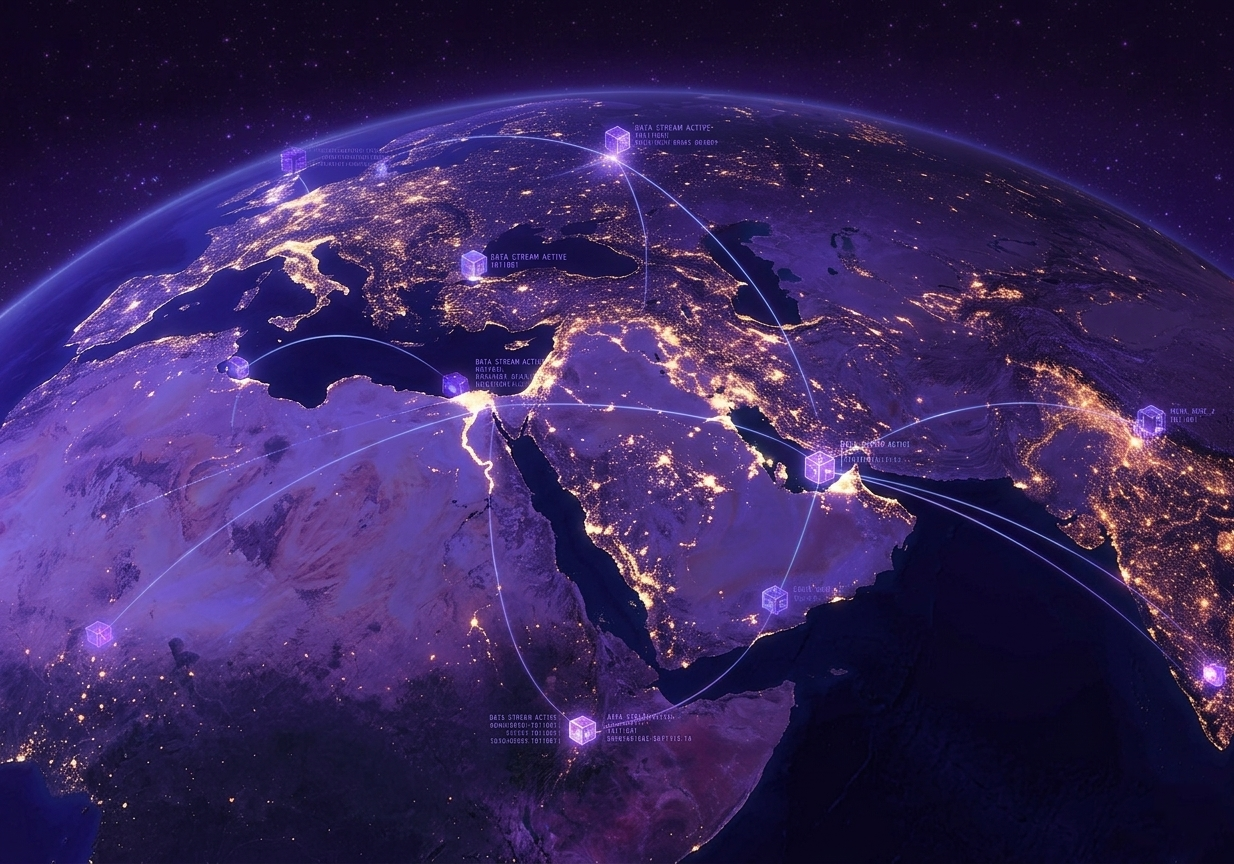
The MENA region spans the Gulf states, the Levant, North Africa, and the broader Arab world. KalaMena AI operates across all of it — one platform, one integration, adapted for each market's dialect, regulatory environment, and enterprise requirements.
Digital Transformation at Regional Scale
From Saudi Arabia's Vision 2030 and the UAE's National AI Strategy 2031 to Egypt's Digital Egypt initiative and Morocco's Digital Morocco 2030 — every major MENA economy has a national digital transformation mandate underway. The demand for AI that works in Arabic is not future-facing. It is a present-day operational requirement.
The Arabic-First Opportunity
Arabic is the fifth most spoken language in the world. It is also one of the most underserved in enterprise AI. The MENA region's enterprises are growing faster than their call centres can staff for. Voice AI that speaks Arabic natively is not a differentiator in this market. It is the baseline requirement.
WhatsApp, Voice, and the MENA Communication Stack
Across MENA, customer communication begins on WhatsApp — not a call centre queue. KalaMena AI operates natively across voice and WhatsApp from the same platform, in the same dialect, with the same Arabic-first experience across every channel.
The MENA region speaks many languages.
So does KalaMena AI.
Arabic Is Not One Language. KalaMena AI Speaks All of Them.
The Middle East and North Africa is home to four major Arabic dialect families — Gulf, Levantine, Egyptian, and Maghrebi — each with its own regional variations, rhythms, and vocabulary. Add the expat and immigrant languages of the region's diverse workforce, and you have the most linguistically complex enterprise market on earth. KalaMena AI handles all of it natively, in real time, without putting the customer on hold while the system figures out what they are saying.
Arabic Dialects — by Region
- Gulf Arabicخليجي
Spoken across Saudi Arabia, the UAE, Kuwait, Qatar, Bahrain, and Oman. Within the Gulf, each country carries its own distinct character: Saudi Najdi and Hejazi, Emirati, Kuwaiti, Qatari, Bahraini, and Omani are all meaningfully different. KalaMena AI handles them all natively.
- Levantine Arabicشامي
The dialect of Lebanon, Syria, Jordan, and Palestine. Levantine Arabic is the most widely consumed Arabic in media and entertainment — and among the most distinct from Gulf Arabic in rhythm, pronunciation, and vocabulary.
- Egyptian Arabicمصري
The most widely understood Arabic dialect in the world, carried by Egypt's outsized cultural influence. The native tongue of over 100 million people. For any MENA enterprise serving Egyptian customers, it is non-negotiable.
- Maghrebi Arabicدارجة / مغربي
Moroccan Darija, Algerian, Tunisian, and Libyan Arabic. Distinct enough from Eastern Arabic that a Gulf-trained model will often fail to understand them. For any enterprise serving North African customers, Maghrebi dialect support is what separates a credible solution from a global one that does not actually work.
- Modern Standard Arabicالفصحى
Used in formal communications, government, and pan-regional broadcasting. Supported across all deployments — without defaulting to it when a customer is clearly speaking in dialect.
Secondary Languages
- EnglishAa
The primary language of international business across the Gulf and North Africa. The default for mixed-language interactions in the UAE, Qatar, and Bahrain.
- FrenchFrançais
Co-official or widely spoken across Morocco, Tunisia, Algeria, and Lebanon. For enterprises operating in North Africa or the Levant, French is a baseline requirement alongside Arabic.
- Hindi & Urduहिंदी | اردو
The Gulf region hosts one of the largest South Asian expat communities in the world. Essential for retail, F&B, healthcare, and IT operations in the UAE, Saudi Arabia, Qatar, Kuwait, and Bahrain.
- TagalogFil
A significant portion of the Gulf's service industry workforce. Handled natively across all deployment types.
Additional languages available on request — speak to our team.
Seven Products. One Platform. Built for the MENA Enterprise.
KalaMena AI is not a single tool. It is a suite of voice AI products designed to automate the full spectrum of customer and employee interactions — across every channel, in every Arabic dialect and secondary language your operation requires, from Casablanca to Kuwait City.
Customer Service Agents
Autonomous voice agents handling customer and employee interactions across MENA enterprises — in Gulf, Levantine, Egyptian, and Maghrebi Arabic, as well as English, French, Hindi, and more. The core of everything we deploy. They understand context, escalate when needed, and never take a day off. Unlimited concurrent conversations. Zero downtime. 24/7 availability.
Smart Answering
Every inbound MENA call answered instantly in the caller's dialect. Zero hold times. Zero missed calls.
Dynamic Drive-Thru
40% faster. 99.5% accurate. Built for MENA QSR and Ramadan peak hours across all dialect regions.
Smart Ordering
25% higher order value. Zero missed phone orders across your MENA network.
AI Autonomics
99.99% uptime. 90% of incidents resolved before users are affected. Built for MENA digital infrastructure scale.
Industries Across MENA

Healthcare
Voice AI for MENA Hospitals, Clinics, and Healthcare Networks
Healthcare is one of the fastest-growing sectors across MENA — driven by Saudi Arabia's Health Sector Transformation Program, the UAE's expanding private hospital networks, Egypt's universal health coverage initiative, and Jordan's emergence as a regional medical tourism destination. Every hospital and clinic across the region faces the same operational pressure: inbound call volume is growing faster than clinical staff can handle it.
KalaMena AI handles the phone. Appointment booking, prescription refills, insurance verification, lab results, post-discharge follow-ups — all in Arabic, in the right dialect for the patient, without a single call going unanswered. Your clinical staff focus on care. The agent handles everything else.
- Appointment booking in Gulf, Levantine, Egyptian, and Maghrebi Arabic
- Prescription refill requests with pharmacy system integration
- Insurance verification before scheduled visits
- Post-discharge follow-up calls in the patient's regional dialect
- Lab result notifications with follow-up appointment booking
- Patient intake and pre-registration by voice
- Symptom triage and routing to the right department or specialist
Calls handled in 3 months
Patient satisfaction score
Calls deflected from patient access centre
Where the MENA AI Conversation Happens
The Middle East and North Africa is not a passive audience in the global AI conversation. It is running some of the world's most significant AI events — and setting the agenda for how enterprise AI is adopted across the region.
GITEX Global & AI Everything
Dubai, December
The world's largest technology event, now at Expo City Dubai. 200,000+ attendees from 180+ countries, running alongside AI Everything — the dedicated global AI expo. The region's most important annual gathering for enterprise AI decision-makers.
LEAP
Riyadh, February
The world's largest technology conference by attendance. Hosted in Riyadh every February — the definitive gathering for Saudi Arabia's AI and digital transformation agenda and a major draw for MENA enterprise decision-makers.
AI Everything MEA
Cairo, February
Organised by GITEX Global in partnership with Egypt's Ministry of Communications. Brings together representatives from over 60 countries. Reflects Egypt's growing role as a hub for AI collaboration across North Africa.
World Government Summit
Abu Dhabi, February
One of the world's most influential gatherings of government and private sector leaders. AI in public services and digital government are consistent centrepieces — shaping the policy environment across MENA.
Future Investment Initiative (FII)
Riyadh, October
Known as Davos in the Desert. FII brings together the world's most influential investors and technology leaders. AI infrastructure and enterprise technology are consistently central to the agenda.
GITEX Africa
Casablanca, April
An expanding force in the North Africa tech ecosystem. Draws startups, investors, and policymakers from across Africa, Europe, and the Middle East — reflecting North Africa's growing role in the MENA digital agenda.
Voice AI Across MENA — Common Questions
Common questions about deploying voice AI in MENA enterprises.
Your MENA Operation Has a Language. KalaMena AI Speaks It.
30 minutes. No pitch. We'll walk through the markets you operate in, the dialects your customers speak, and exactly where voice AI closes the gap between the service you are delivering today and the service your customers expect.