What Abu Dhabi's "machine-readable government" means for every business with a rulebook
Abu Dhabi is turning its written rules into a form AI can apply, starting with food imports. Here is how it works, the safeguards, and what businesses can learn from it.
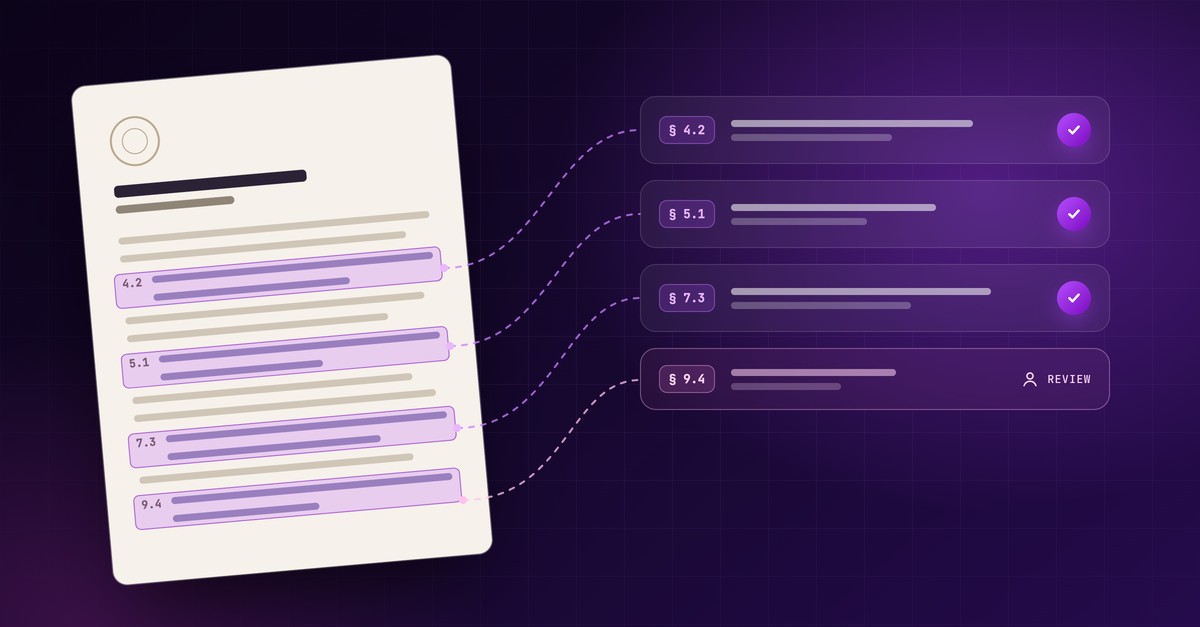
This week, Abu Dhabi announced something that sounds technical but could change how governments, and eventually companies, work. It is called Machine-Readable Government, and it is part of a larger goal: to make Abu Dhabi the world's first AI-native government.
It is not a plan on paper. The first version is already running.
Here is what it actually means, how it works, and why every business that runs on rules and approvals should be paying attention.
What "machine-readable government" means
Every government runs on rules. Who can import what, which documents a permit needs, which conditions a licence must meet. Those rules are written for people: long policy documents, regulations and guidelines that officials read, interpret and apply to each application by hand.
Machine-Readable Government changes the format, not the rules. Abu Dhabi's Department of Government Enablement is turning those written policies into a structured form that AI can read and apply. The rules themselves stay the same. What changes is who does the first check.
When an application comes in, AI checks it against the relevant rules and produces an outcome. Every decision is linked to the exact clause that led to it, so anyone can see why an application passed or failed. Routine cases that used to take days can be assessed in minutes, at any hour.
It is already live
The first pilot is in production with the Abu Dhabi Agriculture and Food Safety Authority, checking food imports. The team behind it built what they call a Policy Adoption Engine: a reusable way of turning written policy into automated compliance checks.
That word "reusable" is the important part. Once the method works for food imports, it can be applied to other rulebooks. Abu Dhabi has already named the next areas: construction permits, business and freelance licensing, data access, HR compliance and procurement. The system will also connect to TAMM, the emirate's single government services app, which brings together more than 1,200 services.
It sits within the Abu Dhabi Government Digital Strategy 2025 to 2027, which has a budget of AED 13 billion.
The safeguards
Handing government decisions to AI raises obvious questions, and the announcement addresses several of them directly.
- People keep the final say. Officials set the standards, review complex cases and remain accountable for decisions.
- Not every decision is in scope. The framework is not meant for high-stakes decisions, or for anything that materially affects a person's rights, eligibility or access to essential services.
- Every outcome is traceable. Because each decision points to a specific clause, it can be checked, challenged and explained.
- The data stays in the country. Processing runs in data centres inside the UAE, the government owns the data, and it is not used to train AI models.
The National put it well in its editorial on the announcement: trust has to be earned with evidence, not assurances, and "efficiency is important, but it is not the sole measure of success."
Why this matters beyond government
Strip away the government setting and what Abu Dhabi has built is a pattern that almost every large organisation could use.
Every company runs on a rulebook. Banks have credit policies and onboarding checks. Insurers have underwriting rules and claims criteria. Hospitals have procedures for referrals and approvals. Every HR department has policies for leave, expenses and allowances. Procurement teams have approval limits and supplier requirements.
In most companies, those rules live in PDFs, shared drives and the heads of experienced staff. Applying them is slow, inconsistent from one person to the next, and hard to audit afterwards.
The same four steps apply:
- Turn the rulebook into structured checks that AI can apply consistently.
- Let AI handle the routine cases, the ones that clearly pass or clearly fail.
- Link every decision to the rule behind it, so it can be explained to a customer, a manager or a regulator.
- Keep people on the exceptions and on anything that genuinely needs judgement.
What companies can learn from it
If you want to try this inside your own organisation, Abu Dhabi's approach offers a few useful lessons.
Start with one process. Abu Dhabi did not start with the whole government. It started with food imports: high volume, clear rules, easy to measure. Pick the equivalent in your business.
Expect to clean up your rules first. Turning written policy into something a machine can apply quickly exposes the gaps and contradictions that people have been quietly working around for years. That clean-up is valuable on its own.
Build in traceability from day one. If an AI decision cannot be explained, it cannot be trusted, and in regulated sectors it cannot be defended. Linking each outcome to a rule is what makes the whole thing workable.
Decide where people stay involved before you start. Draw the line between routine and judgement early, and make it easy for staff to review, override and correct.
Keep sensitive data local. Abu Dhabi chose to keep processing inside the UAE. For banks, insurers and healthcare providers in the region, the same question will come up, so it is worth settling at the start.
The bottom line
Most talk about AI in government is about chatbots that answer questions. Abu Dhabi is doing something more fundamental: rewriting how rules are applied in the first place. If it works, and the first pilot suggests it can, it will not stay in government for long. The companies that start treating their own rulebooks this way will move faster, make more consistent decisions and find it easier to explain them.
At KalaMena AI, we help organisations across the region put AI agents to work on exactly these kinds of routine, rules-heavy processes, from IT service desks to HR lines. If you are thinking about where to start, book a call.